I am as interested in fictional trips as real ones. Given a free week, I would rather book a train to Ankh-Morpork than a flight to a beach — and the ticket costs less.
This post started in 2015 as a holiday list. The holiday is gone; the places are not. What I have changed is the useful part: for each world, why you would want to go, which book gets you through the door, and one honest line about what the visit is actually like.
A note on how to use this: none of these requires reading a series in full. A fictional place is a place, not a completion challenge. Read the first book, and if the door closes behind you, that is a visit.
1. Discworld

Terry Pratchett · 41 novels · 1983–2015 · comic fantasy · start with Equal Rites (1987, ~205 pages) or Guards! Guards! (1989, ~320 pages)
Why visit. Because it is the funniest place on this list and the angriest. Ankh-Morpork is a city with a guild for everything, a Patrician who runs it like a chess problem, and a Watch that solves crimes by walking into them. Pratchett uses it to talk about money, religion, newspapers, the postal service, gender and death, and he never lets the joke get in the way of the point.
Read this first. Equal Rites if you want a short, standalone book about who is allowed to be a wizard. Guards! Guards! if you want a police procedural with a dragon. Both are better doors than publication order.
One line. The only place on this list where the bureaucracy is a feature, not a bug.
2. Hogwarts
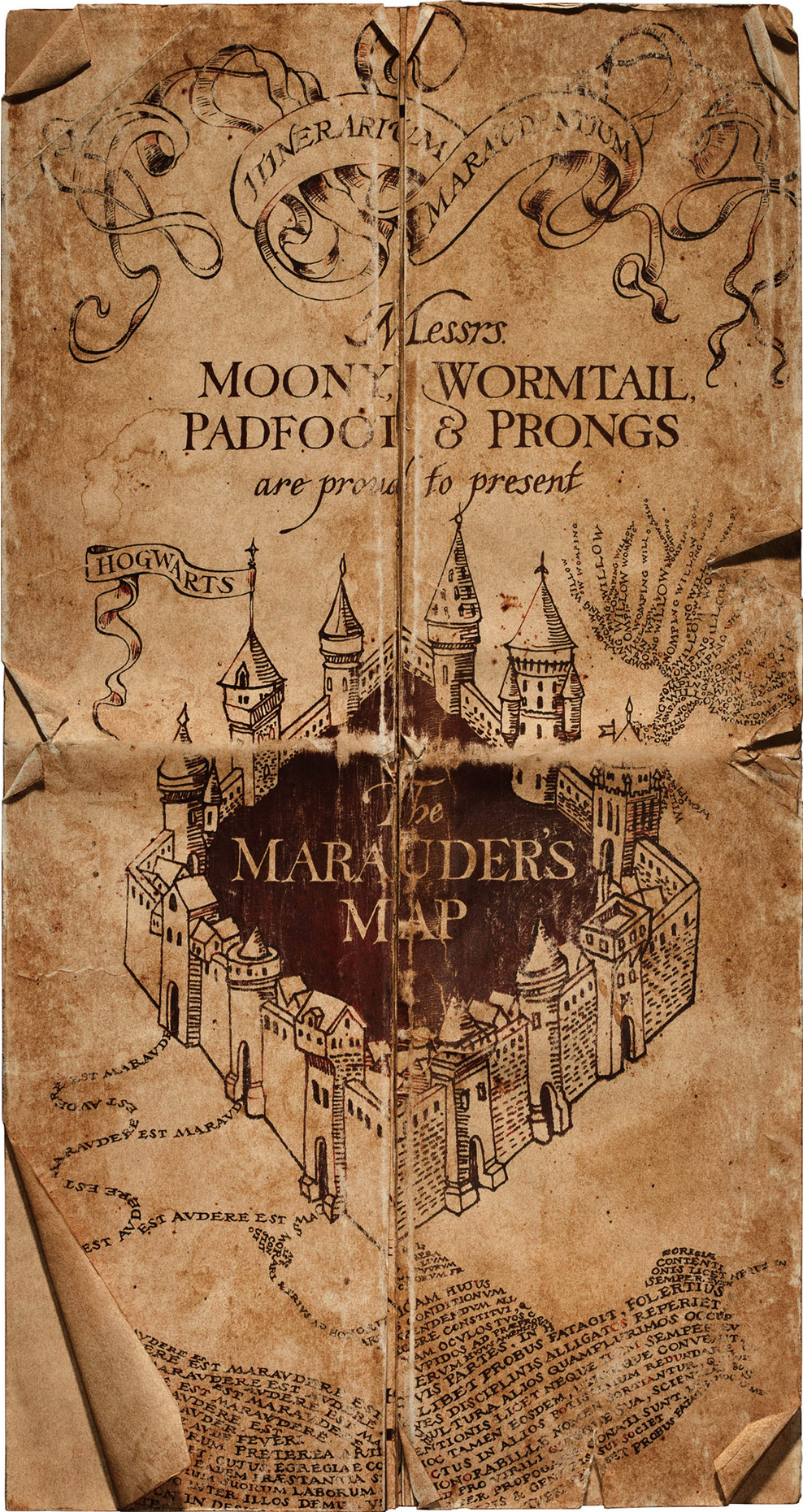
J. K. Rowling · 7 books · 1997–2007 · start with Philosopher’s Stone (~223 pages)
Why visit. The castle is the most convincing school in fiction: moving staircases, a forest with rules, a map that shows everyone, and teachers who are brilliant and wrong in equal measure. The world-building is the famous part, but what makes it worth returning to is that it takes children seriously — their friendships, their grudges, their sense of fairness.
The films are good and the books are better, and not for the usual reason. The books have room for the small things the films cut: the meals, the letters, the arguments in the common room. On a reread as an adult, the politics of the wizarding world are the part that grows.
3. Westeros

George R. R. Martin · A Song of Ice and Fire · 5 of 7 published · start with A Game of Thrones (~800 pages)
Why visit. Because it is the most politically serious fantasy on this list. Westeros is a place where honour is a liability, weddings are tactical, and the question is never “who is good” but “who has the power, and what will it cost the people below them”. Nobody is safe, which is the point: the books are about what happens to ordinary people when lords play.
I personally would not start it because of the wait between books, and I hate finishing a book in two days and then waiting a year. Read it knowing you may be stopping at a cliff edge, or read A Knight of the Seven Kingdoms — three self-contained novellas — for the place without the wait.
One line. The only entry where the review includes the words “content warning”
4. Middle Earth

J. R. R. Tolkien · The Hobbit (1937) and The Lord of the Rings (1954–55) · start with The Hobbit (~310 pages), then The Fellowship of the Ring
Why visit. Because no one has built a landscape like it. Middle-earth is not scenery; it has weather, lineages, languages and ruins that remember older wars. Tolkien writes the way a historian writes, and the effect is that the place feels older than the story you are reading.
It is also slow. Beautifully slow. The Council of Elrond is long, the songs are many, and Tom Bombadil is a test of character. That is not a flaw to fix but it is a thing to know before you start: this is a place to walk through, not a plot to get through.
Read this first. The Hobbit, which is a children’s book and a fast one, then Fellowship. Do not start with The Silmarillion.
One line. The best place on this list to be lost in, and the easiest to be defeated by.
5. Panem

Suzanne Collins · The Hunger Games trilogy, plus The Ballad of Songbirds and Snakes (2020) and Sunrise on the Reaping (2025) · start with The Hunger Games (~374 pages)
Why visit. Because it is the fastest read here and the one that stings most. Panem is a country of districts that supply a capital, and the Games are the annual reminder of who owns whom. Collins writes action cleanly, but the series is really about propaganda, reality television, and how a person becomes a symbol they did not agree to be.
The trilogy is a rare case where the premise and the execution match. A warning: it is YA in marketing and not in content. Children die on the page, and the third book is about the damage war does to the people who survive it.
Read this first. The Hunger Games, then straight into Catching Fire — the first book ends mid-arc. Read the prequels last, and Songbirds and Snakes after the trilogy.
One line. Do not move here. Visit for a week, and be glad of the return ticket.
6. Narnia

C. S. Lewis · 7 books · 1950–1956 · start with The Lion, the Witch and the Wardrobe (~200 pages)
Why visit. Because it is the most efficient door in children’s literature: a wardrobe, a lamppost, snow, a faun with an umbrella. Lewis wrote the books fast and loosely, and the looseness is part of the charm — Father Christmas turns up, the beavers are wonderful, and the theology is never more than a page away from a joke.
Read it in publication order, not the chronological order the publishers now print: The Lion, the Witch and the Wardrobe first, The Magician’s Nephew sixth. Chronology explains the wardrobe; publication order makes the wardrobe a surprise, which is better.
Note: The books carry the assumptions from a different time, and some of them have aged badly.
Read this first. The Lion, the Witch and the Wardrobe.
One line. A children’s series that adults keep re-reading.
7. Wonderland

Lewis Carroll · Alice’s Adventures in Wonderland (1865) and Through the Looking-Glass (1871) · start with Alice’s Adventures in Wonderland (~100 pages, public domain)
Why visit. Because it is the only place on this list with no plot, and it does not need one. Wonderland runs on language: puns, logic puzzles, parodies of Victorian poems, arguments that are grammatically correct and completely absurd. The Queen of Hearts is a temper, the Cheshire Cat is a smile, the tea party is a conversation with no exit.
You are never too old for it, and the older you are the more of it you get. Read it once as a story, then read it again with Martin Gardner’s The Annotated Alice — half the jokes are aimed at adults who have read the poems Carroll is mocking.
Read this first. Alice’s Adventures in Wonderland, free on Project Gutenberg, in one evening. Skip the poems on the first pass and come back for them.
One line. The one place here where the words are the scenery.
8. Earthsea
Ursula K. Le Guin · 6 books · 1968–2001 · start with A Wizard of Earthsea (1968, ~183 pages)
Why visit. Because it is the quietest great fantasy and the one that has aged best. Earthsea is an archipelago of small islands, a school for wizards on Roke, and a system of magic built on true names — to know a thing’s name is to have power over it, which means every act of magic is an act of knowledge and every act of knowledge has a cost.
A Wizard of Earthsea is a hundred and eighty pages and it does more than most trilogies. Ged is a goatherd who is proud, talented and impatient; he shows off, unleashes something he cannot name, and spends the rest of the book trying to catch it. The monster is not an army or a dark lord. It is the thing he made, and the only way to beat it is to stop running.
What makes the series worth more than one visit is that Le Guin kept returning to it and arguing with herself. The Tombs of Atuan leaves Ged behind and hands the book to a girl raised to serve the dark. Tehanu, written twenty years later, comes back to the same world and asks what happens to the people the first three books left out — women, the powerless, the ordinary. It is the rare fantasy series that gets wiser instead of bigger.
Read this first. A Wizard of Earthsea, then The Tombs of Atuan. Do not skip to Tehanu; its whole argument depends on your having read the boys’ adventure first.
One line. The smallest door on this list, and it opens onto the largest room.
9. Gormenghast
Mervyn Peake · Titus Groan (1946), Gormenghast (1950), Titus Alone (1959) · start with Titus Groan (~500 pages)
Why visit. Because the castle is the main character, and no one has written a building like it. Gormenghast is a country-sized pile of stone, ritual and paperwork, ruled by a family that has forgotten why any of the ceremonies exist, served by servants who have made a religion of routine. Into this comes Steerpike, a kitchen boy who decides to climb. He has no magic and no army. He has patience, and he is the most frightening character in anything on this list.
The prose behaves like architecture: long, carved, deliberate sentences that make you feel the weight of the stone. Peake was an illustrator and a poet, and it shows — the book is a drawing you read. It is also funny, in a grim, grotesque way; the Earl’s library, the Doctor’s patients and the Twins are comic inventions as much as gothic ones.
Notes:
- It is slow, and the slowness is the method: the first hundred pages build a place, not a plot, and if you read for momentum you will stall.
- Maybe stop after the second book. Titus Alone leaves the castle, was written while Peake was seriously ill, and reads like a different, thinner novel
Read this first. Titus Groan. Give it a hundred and fifty pages — until Steerpike is on the roof, and you understand what kind of book you are in.
One line. Not a place to visit so much as a place to be detained in, willingly, for a month.
10. The City and the City
China Miéville · standalone · 2009 · ~312 pages · Hugo, Locus, Arthur C. Clarke and World Fantasy awards · start here, it is the only book
Why visit. Because it is the only entry that makes you do something. Besźel and Ul Qoma occupy the same streets, the same weather, the same intersections — and their citizens are trained from childhood not to see each other. To notice the other city is “breach”, a crime worse than murder. Miéville writes it as a police procedural: Inspector Tyador Borlú investigates a body found in one city and claimed by the other, and the investigation keeps forcing him to look at what he has spent his life unseeing.
That conceit is a machine for thinking. It is about borders, partition, class, the neighbours we refuse to acknowledge, and the mental effort required to keep a city’s arrangement of who-counts-and-who-doesn’t running smoothly. The trick is that the book never explains itself to you. The first fifty pages are deliberately disorienting — you are learning to unsee along with Borlú — and then it clicks and you cannot read the page the same way again.
It is also a genuinely good mystery, which is rarer than it sounds: the resolution is fair, the politics are load-bearing, and the ending is a choice rather than a twist. The BBC adaptation is decent; the book is better, because the central effect only works in prose.
Read this first. Here, obviously. If you like it, Perdido Street Station is the bigger, messier Miéville; The Scar is the better one.
One line. The only place on this list that comes with homework, and the only one that changes how you walk down your own street afterwards.
FAQ
Which of the three should I read first? The Hunger Games if you read fast and want momentum; Equal Rites if you want comedy; Alice if you want a single evening. A Wizard of Earthsea if you want the best book on this list.
Do I have to read the whole series? No. Pick the first book, and stop if the place does not suit you. This is a travel guide, not a syllabus.
Can I just watch the films? You can, and for The Hunger Games and Harry Potter the adaptations are good. Then you have seen the postcard, not the place. The books are where the interior life is.
Which of these is suitable for children? Alice, Narnia and The Hobbit read aloud from about seven. Harry Potter grows with the reader; the later books are for older children. The Hunger Games is YA with real violence, and A Game of Thrones is for adults.
Where do I start with Discworld? Not with book one. Equal Rites for the Witches, Guards! Guards! for the Watch, Mort for Death, Small Gods for a standalone. Details in my Equal Rites post.
Is Gormenghast fantasy? Not exactly. There is no magic. It is a gothic novel about ritual, power and a castle, and it sits on the shelf next to Mervyn Peake rather than next to Tolkien.
Should I read Titus Alone? Read it if you love the first two and want to see the world outside the castle. Expect a different, lesser book — Peake was ill while writing it.
Is The City and the City hard to follow? The first fifty pages are meant to be. The rule is: if a character walks past something without reacting, you are not supposed to see it either. It resolves.
Can I read Earthsea out of order? Publication order is best. Tehanu depends on your having read the first three, and The Other Wind depends on Tehanu.
Which order should I read Narnia in? Publication order, starting with The Lion, the Witch and the Wardrobe, even though the box sets now number The Magician’s Nephew first.
Which of these can I read for free? Alice and The Hobbit are public domain in many countries; Project Gutenberg and Standard Ebooks have clean editions. The rest are in copyright — use your library.
Which of these would you actually walk into first? Drop your comments below.



Ahhh a lovely collection..👌👌I actually don’t mind reading harry potter and LOTR again and again..but I would sooo love to settle down with a nice nancy drew mystery.. thats enough to soothen me right now..😉
LikeLiked by 1 person
Ah, Nancy Drew! Mere mention of the name takes me back to school days. I’ll probably read one of the books once the new year kicks in 🙂
LikeLiked by 1 person
Geeeee do lemme know which one u reading..😆
LikeLiked by 1 person
I ve been to panem, hogwards and wonderland beautiful places xD I want to finish divergent and some Nicholas spark books that I have stacked in my library. haba
LikeLiked by 1 person
I should read divergent too. Bought it a long time back, but forgot to get into it.
I’ve never read a Nicholas Sparks book. What would you suggest I begin with?
LikeLiked by 1 person
Me too! It’s waiting for me literally. Oh you really should…if you are into romance…all his books have this charm in them. You can read the all famous notebook or a walk to remember or the best of me that I have started xD. The guy is addicting haha
LikeLiked by 1 person
I’ll start with the notebook then. Thanks for the suggestions 🙂
LikeLiked by 1 person
Hope you enjoy! And you’re welcome 😉
LikeLiked by 1 person
Wonderful Collection, Anusha! I love the concept of visiting the places through the b’ful world of books! Matchless!
LikeLiked by 1 person
Thanks!
LikeLike